“Used them a while back. Work was alright, nothing to complain about really. Riley called the other day asking if any issues popped up and asked for a review. Everything’s fine so far, so fair enough...”

Jordan Mitchel
Google review · Oct 2026
A toilet overflow doesn't stay on the bathroom floor. It runs under tile, into walls, and through the ceiling below. Soundview Restoration extracts the water, sanitizes everything it touched, and dries the structure, 24/7 across King and Snohomish County with a 60-minute average response.
Call Now — (206) 539-2660WA Registered Contractor #PUGETPW813NB · Washington UBi 604329017
Shut off the water. Turn the valve behind the toilet clockwise. If it's stuck, lift the tank lid and pull the float up.
Don't flush again. If the drain is blocked, another flush sends more water over the rim.
Keep kids and pets away. Bowl water carries bacteria even when it looks clear. Wear gloves.
Watch for electrical risk. If water is near outlets or dripping through a light fixture below, shut off that circuit at the breaker.
Take photos before anything is cleaned up. Your insurance claim will need them.
Call us. We'll talk you through next steps and get a crew moving.
The answer decides how the cleanup has to be done. Restoration pros use three IICRC water categories:
Source: Tank or supply line
What it means: Lowest risk, but turns contaminated within a day or two
Source: Bowl overflow with no solid waste
What it means: Contaminated. Porous materials often need removal.
Source: Overflow with feces, or sewage backing up from the drain
What it means: Serious health hazard. Requires containment, PPE, and removal of affected materials.
If water came up through the toilet from the sewer line, or other drains backed up at the same time, treat it as Category 3. See our sewage cleanup page.
A few minutes of overflow can reach:
In Seattle condos and apartments, the unit below is often the first sign. We use moisture meters and thermal imaging to find wet materials you can't see.
Assessment. We map how far the water traveled and identify the water category.
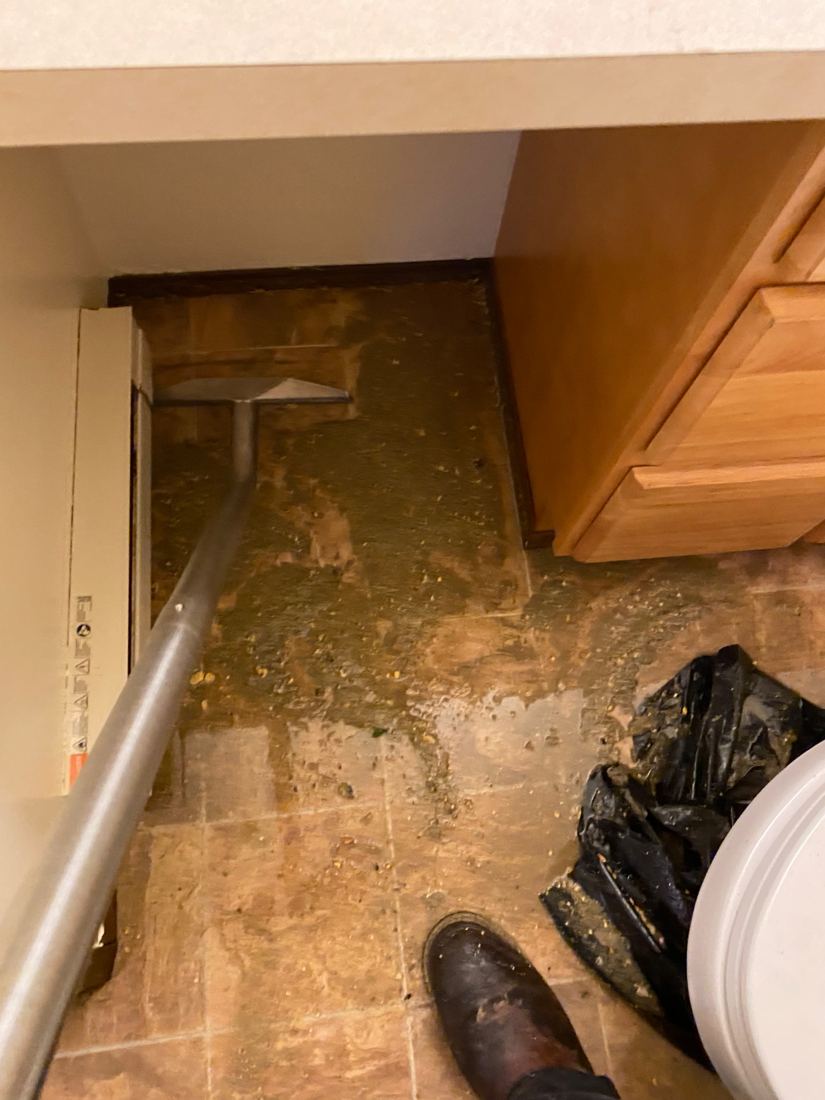
Extraction. Standing water is removed from floors and pulled out of carpet and pad.
Removal of contaminated materials. Carpet pad, baseboards, and drywall that absorbed Category 2 or 3 water are removed, following IICRC S500 standards.
Cleaning and sanitizing. Every affected surface is cleaned and treated with antimicrobial.
Structural drying. Air movers and dehumidifiers run until moisture readings confirm the area is dry.
Repairs. Flooring, drywall, trim, and ceilings are put back. See our reconstruction services.
Common causes are a clog in the toilet trap, a blocked main line, tree roots in the side sewer, a blocked vent, or a faulty fill valve or float. If several drains are slow or gurgling, the main line is the likely problem.
A sudden overflow is often covered under a standard homeowners policy. A backup from the sewer line usually requires a sewer or water backup endorsement. Damage from a slow, ongoing leak is commonly denied.
We document the damage with photos and moisture readings and bill your insurer directly on covered claims. For condos, we can coordinate with your HOA's insurance as well. More on our insurance claims support page.
“Used them a while back. Work was alright, nothing to complain about really. Riley called the other day asking if any issues popped up and asked for a review. Everything’s fine so far, so fair enough...”
Jordan Mitchel
Google review · Oct 2026
“Had a major issue at my place recently and Riley with his team were total lifesavers. Communication was super clear from min one, they showed up fast and handled all the cleanup and fixing without any hassle. Honestly made a stressful situation way easier. Huge thanks to the crew!”

Emily Colins
Google review · Oct 2026
“Even though we had a really stressful negative incident at our place in Seattle, Riley and his team made the whole situation so much easier. They are super professional and the communication was top notch right from the start! Really grateful for their fast helpful”

Ashley Bennett
Google review · Oct 2026
“Huge thanks to soundview restoration! Had a broken pipe in and they saved the day. Brought heavy duty stuff to dry the floor and walls, replaced damaged materials and finished all the repairs. Great quality work and good price. Thanks again guys!”

Brian Davis
Google review · Oct 2026
“Great company, prompt, trustworthy and do very good work. I highly recommend!”

Amo Oganov
Google review · Oct 2026
“Really grateful to this team! We had an urgent problem in the middle of the night, and they came out quickly and got it taken care of. Their quick response may have saved us a lot of money by keeping things from getting worse. Such a relief to have someone show up when we really needed help. Thank you again!!!”

Simon Karavai
Google review · Oct 2026
“Best water damage restoration company! They saved our home. We had a sudden flood in our house and called for emergency water damage repair. The team arrived fast, handled the water extraction, removed the damaged drywall, and set up professional drying equipment. Thanks to their quick flood cleanup and structural drying, we avoided mold and further damage. Friendly, honest, and very professional. Highly recommend them for water damage restoration and emergency water removal. Thank you! ❤️”

Artem Rumeli
Google review · Oct 2026
“Really happy with the service from Soundview Restoration. They were quick to respond, explained everything clearly and made the whole process much less stressful. The crew was professional and easy to deal with. Would definitely recommend them!”

Ethan Carter
Google review · Sep 2026
“With two toddlers at home, the last thing I expected was our fire sprinkler going off and flooding our Ballard condo. It was honestly overwhelming, but the team showed up really quickly and jumped right in. They were super respectful of our space, helped protect our furniture and kids' things, and kept everything as organized as possible while setting up drying equipment. They checked in daily and explained what they were doing in a way that actually made sense, which I appreciated. They also helped walk us through the insurance process, which was a huge relief since I had no idea where to start. Overall, they made a really stressful situation much more manageable. Would definitely recommend”

Sarah Moore
Google review · May 2026
“Best in class delivery and communications”

Dennis Kim
Google review · Apr 2026
“Excellent communication and service!”

Linnea Shelley
Google review · Apr 2026
“The owner Riley is incredibly dedicated. He communicates quickly, works in a timely manner, and eliminates the stress of messy restoration work. He goes above and beyond to make sure everything is handled right. Definitely would recommend to a friend”

August Norman
Google review · Apr 2026
“Reilly and his team are extremely professional and knowledgeable. I have had the pleasure to work with them and would certainly recommend them to any friends or family that experience water damage in their home or business.”

Edward Smith
Google review · Apr 2026
“Soundview Restoration is a company you can trust from start to finish. Their team is reliable, highly knowledgeable, and consistently delivers quality work. They communicate clearly, stay organized, and make the entire process smooth and stress-free. Great people to work with and a solid choice if you need restoration services.”

Benji Ellis
Google review · Apr 2026
For non-emergency services, please complete the form below to request a callback. If you require immediate restoration assistance, call us 24/7 at 206-539-2660.