“Used them a while back. Work was alright, nothing to complain about really. Riley called the other day asking if any issues popped up and asked for a review. Everything’s fine so far, so fair enough...”

Jordan Mitchel
Google review · Oct 2026
Water damage restoration involves more than removing standing water. Learn how professionals inspect moisture, extract water, dry affected materials, monitor progress, and document the restoration process.
Need Restoration Services in Seattle? View Our ServicesWA Registered Contractor #PUGETPW813NB · Washington UBi 604329017
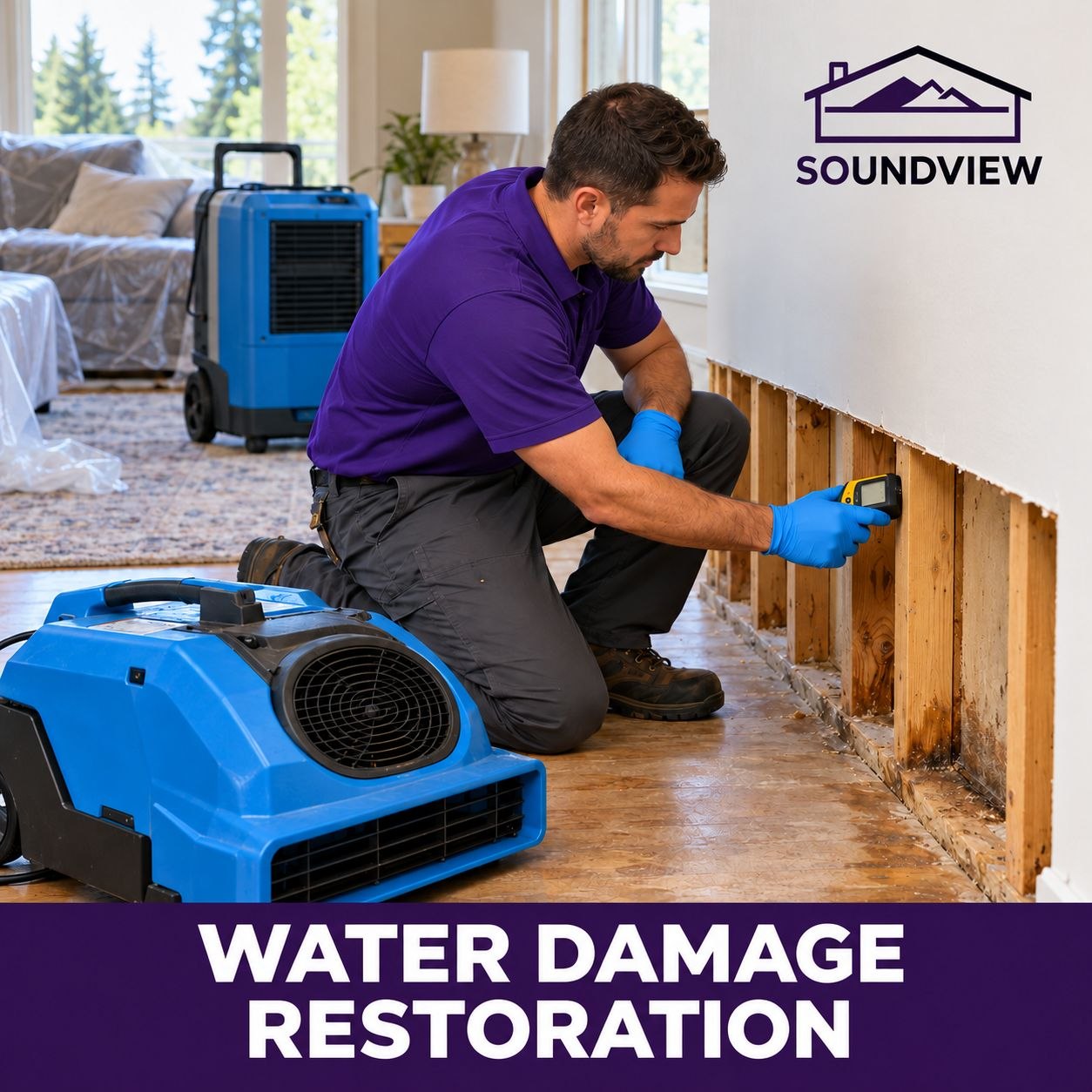
Find the source, check hazards, and map moisture.
Remove as much liquid water as possible.
Evaporate moisture and remove it from the air.
Address contaminated or unsalvageable materials.
Confirm drying goals and record the results.
The order can vary. Contamination, damage severity, and material conditions may mean cleaning or material removal happens earlier, or that some steps overlap.
Every restoration starts with understanding the loss. A technician will typically:
Water originating from a sanitary source, such as a supply line, subject to changing conditions.
Water containing significant contamination, such as discharge from a washing machine or dishwasher.
Grossly contaminated water, including sewage and certain floodwater.
Water category can change. Clean water that sits for days, or travels through contaminated materials, can become Category 2 or 3. Sewage is handled under specific precautions — see sewage backup cleanup.
Removing liquid water is far faster than evaporating it, so extraction is one of the most important early steps. Professional pumps and extraction tools remove standing water and water held in some materials.
Need water removed now? See emergency water removal. For outside water entering the home, see flood damage restoration. For water under the house, see crawlspace water damage, and for a bathroom flood, see toilet overflow cleanup.
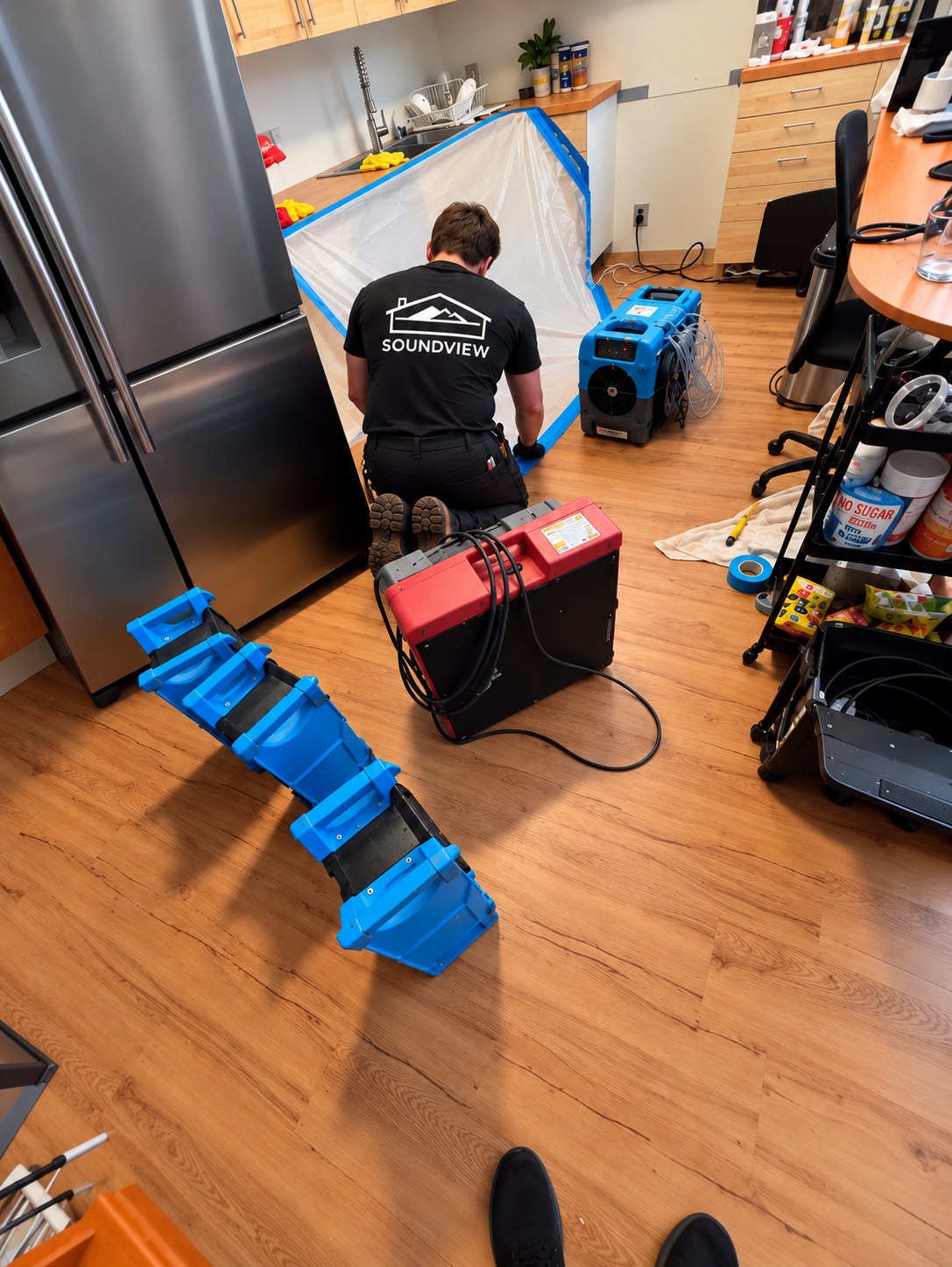
After extraction, materials still hold water. Structural drying works by moving that moisture out of materials and then out of the air. Done correctly, it's the difference between a controlled loss and lingering moisture that leads to mold or decay.
Air movers speed up evaporation from drywall, flooring, and framing.
Evaporated water raises the room's humidity.
Removing vapor from the air keeps evaporation going until materials are dry.
Dehumidifiers don't pull water directly out of walls — they dry the air so moisture inside materials can keep evaporating.
Controlled warmth increases evaporation rates and helps dehumidifiers work efficiently.
Readings show whether materials are drying and guide equipment adjustments.
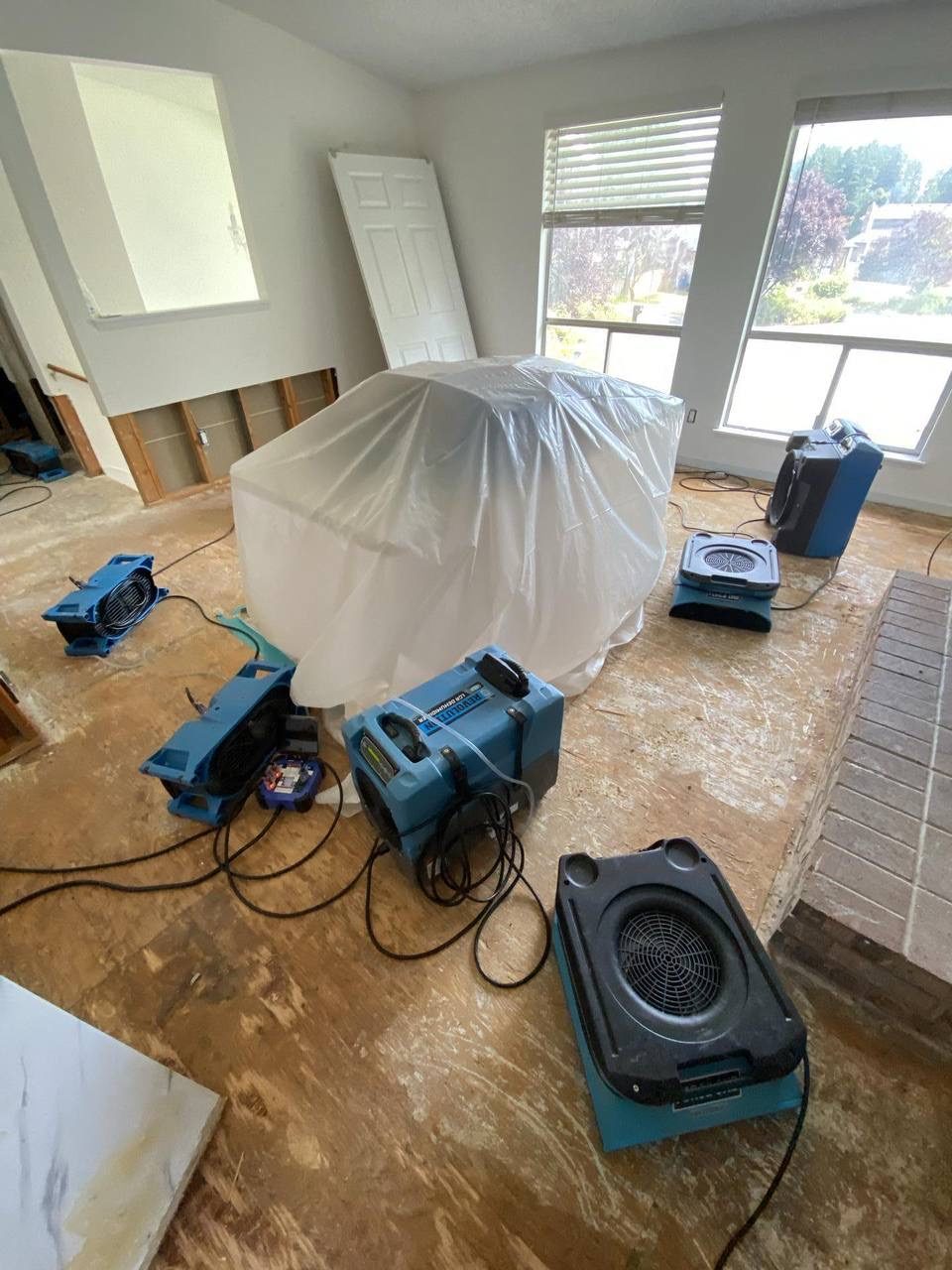
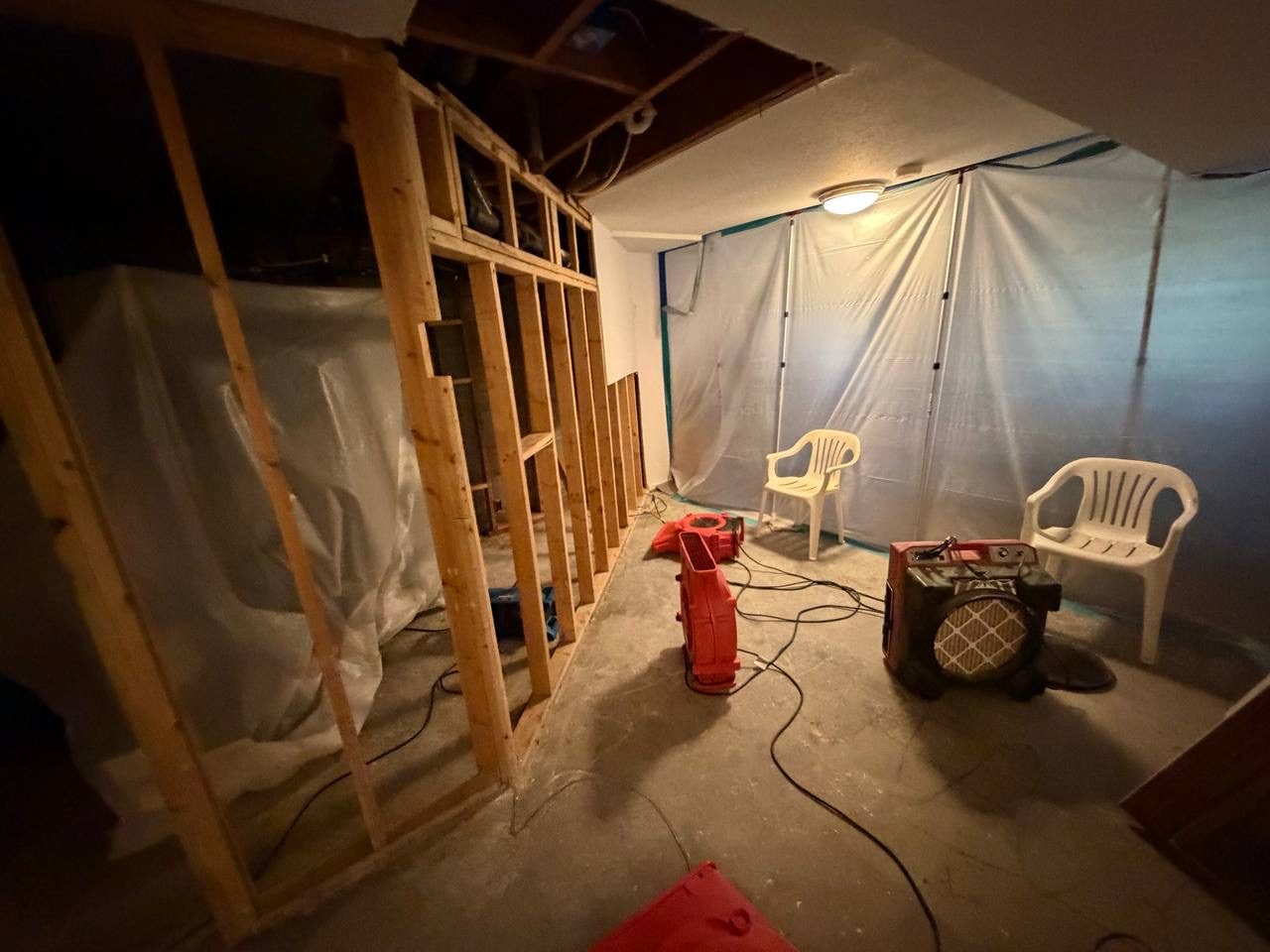
Equipment selection and placement depend on the affected materials, the size of the space, drying conditions, and project requirements. Dense materials like hardwood or plaster may need specialized equipment, while basements and crawlspaces may need extra humidity control.
Not every water loss requires demolition. Depending on the water category and how long materials stayed wet, restoration may include:
Material removal and cleaning often happen early — sometimes before drying equipment is set — when contamination or saturation makes it necessary.
Drying is measured, not guessed. Regular moisture monitoring typically includes:
Not every material can be restored. When drywall, flooring, or cabinets have been removed, reconstruction follows mitigation to repair the structure.
Dealing with water damage right now?
Call (206) 539-2660, available 24/7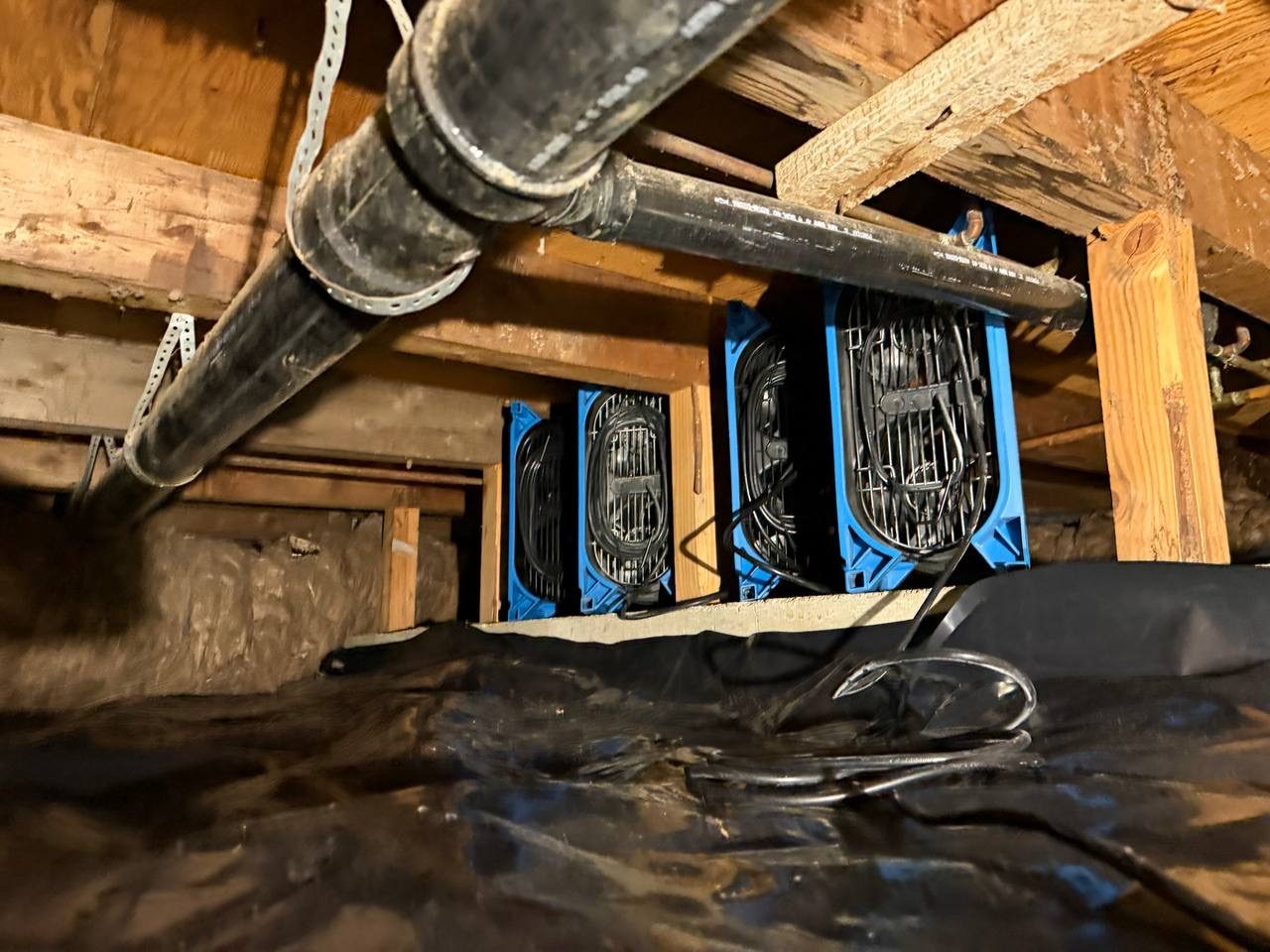
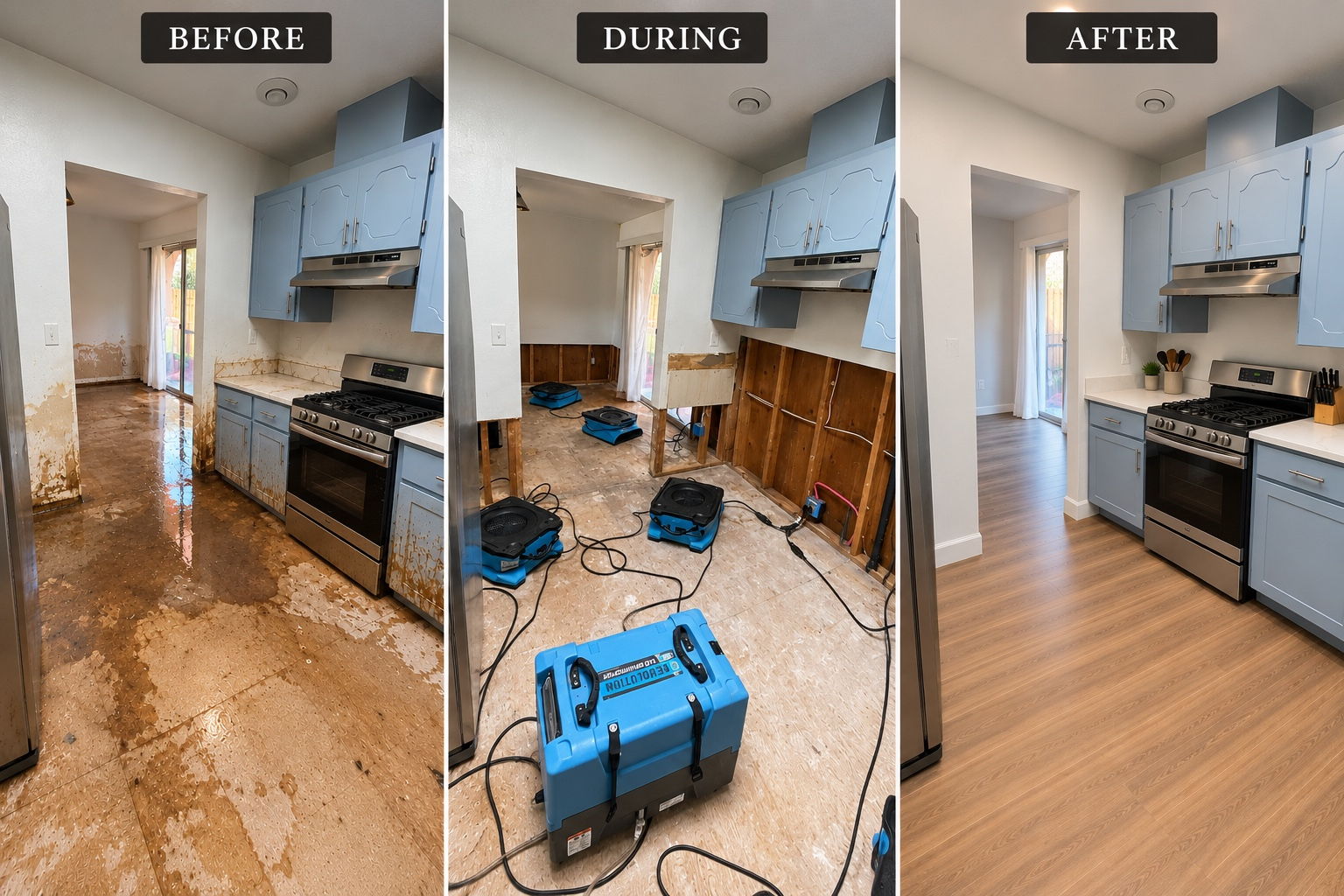
Initial water damage — standing water across the kitchen floor.
Cabinets and damaged materials removed while drying equipment runs.
Repairs completed with new cabinets and flooring.
In Western Washington's damp climate, materials can stay wet longer than in drier regions. Not every water loss requires dehumidification, but when it's needed, it protects:
Wet gypsum can lose strength, sag, and support mold growth if it stays damp.
Framing that stays wet can swell, warp, or decay over time.
Hardwood can cup or buckle; subfloors and underlayment can trap moisture.
Wet insulation loses its insulating value and holds moisture against the structure.
Below-grade spaces in Seattle's damp climate often dry slowly without humidity control.
“Used them a while back. Work was alright, nothing to complain about really. Riley called the other day asking if any issues popped up and asked for a review. Everything’s fine so far, so fair enough...”
Jordan Mitchel
Google review · Oct 2026
“Had a major issue at my place recently and Riley with his team were total lifesavers. Communication was super clear from min one, they showed up fast and handled all the cleanup and fixing without any hassle. Honestly made a stressful situation way easier. Huge thanks to the crew!”

Emily Colins
Google review · Oct 2026
“Even though we had a really stressful negative incident at our place in Seattle, Riley and his team made the whole situation so much easier. They are super professional and the communication was top notch right from the start! Really grateful for their fast helpful”

Ashley Bennett
Google review · Oct 2026
“Huge thanks to soundview restoration! Had a broken pipe in and they saved the day. Brought heavy duty stuff to dry the floor and walls, replaced damaged materials and finished all the repairs. Great quality work and good price. Thanks again guys!”

Brian Davis
Google review · Oct 2026
“Great company, prompt, trustworthy and do very good work. I highly recommend!”

Amo Oganov
Google review · Oct 2026
“Really grateful to this team! We had an urgent problem in the middle of the night, and they came out quickly and got it taken care of. Their quick response may have saved us a lot of money by keeping things from getting worse. Such a relief to have someone show up when we really needed help. Thank you again!!!”

Simon Karavai
Google review · Oct 2026
“Best water damage restoration company! They saved our home. We had a sudden flood in our house and called for emergency water damage repair. The team arrived fast, handled the water extraction, removed the damaged drywall, and set up professional drying equipment. Thanks to their quick flood cleanup and structural drying, we avoided mold and further damage. Friendly, honest, and very professional. Highly recommend them for water damage restoration and emergency water removal. Thank you! ❤️”

Artem Rumeli
Google review · Oct 2026
“Really happy with the service from Soundview Restoration. They were quick to respond, explained everything clearly and made the whole process much less stressful. The crew was professional and easy to deal with. Would definitely recommend them!”

Ethan Carter
Google review · Sep 2026
“With two toddlers at home, the last thing I expected was our fire sprinkler going off and flooding our Ballard condo. It was honestly overwhelming, but the team showed up really quickly and jumped right in. They were super respectful of our space, helped protect our furniture and kids' things, and kept everything as organized as possible while setting up drying equipment. They checked in daily and explained what they were doing in a way that actually made sense, which I appreciated. They also helped walk us through the insurance process, which was a huge relief since I had no idea where to start. Overall, they made a really stressful situation much more manageable. Would definitely recommend”

Sarah Moore
Google review · May 2026
“Best in class delivery and communications”

Dennis Kim
Google review · Apr 2026
“Excellent communication and service!”

Linnea Shelley
Google review · Apr 2026
“The owner Riley is incredibly dedicated. He communicates quickly, works in a timely manner, and eliminates the stress of messy restoration work. He goes above and beyond to make sure everything is handled right. Definitely would recommend to a friend”

August Norman
Google review · Apr 2026
“Reilly and his team are extremely professional and knowledgeable. I have had the pleasure to work with them and would certainly recommend them to any friends or family that experience water damage in their home or business.”

Edward Smith
Google review · Apr 2026
“Soundview Restoration is a company you can trust from start to finish. Their team is reliable, highly knowledgeable, and consistently delivers quality work. They communicate clearly, stay organized, and make the entire process smooth and stress-free. Great people to work with and a solid choice if you need restoration services.”

Benji Ellis
Google review · Apr 2026
For non-emergency services, please complete the form below to request a callback. If you require immediate restoration assistance, call us 24/7 at 206-539-2660.